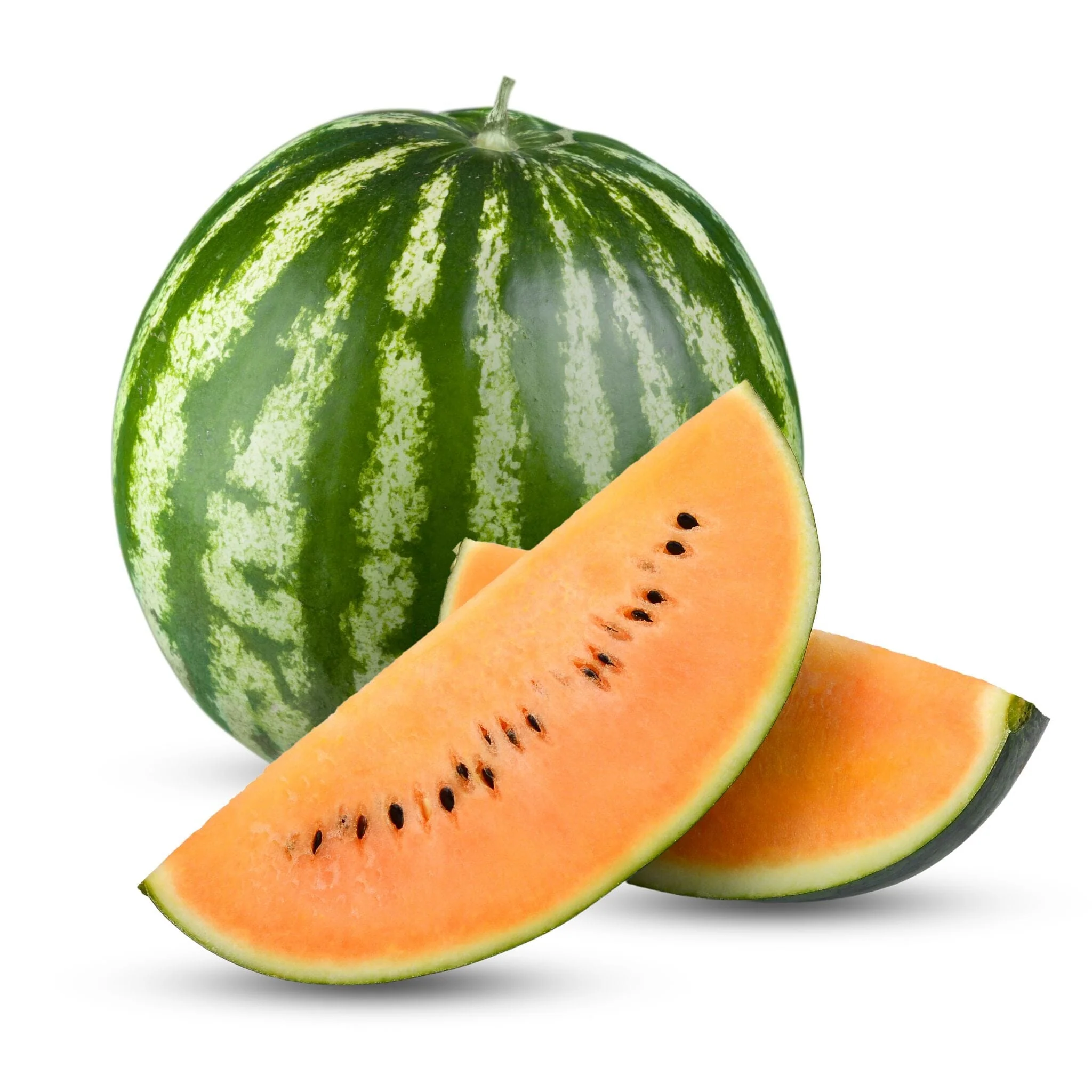
Melon - Orange Watermelon
Weight - 1.5kg
Origin - Africa
Introduction
The orange watermelon is a unique and rare fruit; a sunny twist on the classic red watermelon that we all know and love! Orange watermelons offer a different kind of sweetness, with notes of cantaloupe, and a firmer, crunchier texture.
History
Watermelons, including the orange variety, have a rich history that dates back to ancient times, particularly in regions such as Egypt, where they were found in tombs dating back to 4000 years ago. The orange watermelon is a relatively modern cultivar.
Regions
The orange watermelon, a unique variety of the traditional watermelon, is believed to have originated in Africa, where watermelons have been cultivated for thousands of years. Today, the orange watermelon is very rare, but can be found growing in various regions across the United States, particularly in states with warmer climates like Florida and California, as well as in other parts of the world where melons thrive.
Flavours & Texture
The orange watermelon is celebrated for its sweet, tropical flavour, which is often described as a mix between traditional watermelon and cantaloupe. Its flesh is firm and juicy, providing a refreshing crunch.
Preparation
Carefully slice off the top and bottom of yellow watermelon using a serrated bread knife. Stand melon on a cut side, and carefully slice down through the middle. Cut the watermelon into wedges. You can eat it raw, in a fruit salad, or make juice, or smoothies.
Nutritional Value
Watermelon is very low in calories and contains a high level of antioxidants.
|
Calories per 100 g |
30 kcal |
|
Fat |
0,2 g |
|
Carbohydrates |
7.6 g |
|
Fibre |
0.4 g |
|
Protein |
0.6 g |
Weight - 1.5kg
Origin - Africa
Introduction
The orange watermelon is a unique and rare fruit; a sunny twist on the classic red watermelon that we all know and love! Orange watermelons offer a different kind of sweetness, with notes of cantaloupe, and a firmer, crunchier texture.
History
Watermelons, including the orange variety, have a rich history that dates back to ancient times, particularly in regions such as Egypt, where they were found in tombs dating back to 4000 years ago. The orange watermelon is a relatively modern cultivar.
Regions
The orange watermelon, a unique variety of the traditional watermelon, is believed to have originated in Africa, where watermelons have been cultivated for thousands of years. Today, the orange watermelon is very rare, but can be found growing in various regions across the United States, particularly in states with warmer climates like Florida and California, as well as in other parts of the world where melons thrive.
Flavours & Texture
The orange watermelon is celebrated for its sweet, tropical flavour, which is often described as a mix between traditional watermelon and cantaloupe. Its flesh is firm and juicy, providing a refreshing crunch.
Preparation
Carefully slice off the top and bottom of yellow watermelon using a serrated bread knife. Stand melon on a cut side, and carefully slice down through the middle. Cut the watermelon into wedges. You can eat it raw, in a fruit salad, or make juice, or smoothies.
Nutritional Value
Watermelon is very low in calories and contains a high level of antioxidants.
|
Calories per 100 g |
30 kcal |
|
Fat |
0,2 g |
|
Carbohydrates |
7.6 g |
|
Fibre |
0.4 g |
|
Protein |
0.6 g |
Original: $17.64
-65%$17.64
$6.17Description
Weight - 1.5kg
Origin - Africa
Introduction
The orange watermelon is a unique and rare fruit; a sunny twist on the classic red watermelon that we all know and love! Orange watermelons offer a different kind of sweetness, with notes of cantaloupe, and a firmer, crunchier texture.
History
Watermelons, including the orange variety, have a rich history that dates back to ancient times, particularly in regions such as Egypt, where they were found in tombs dating back to 4000 years ago. The orange watermelon is a relatively modern cultivar.
Regions
The orange watermelon, a unique variety of the traditional watermelon, is believed to have originated in Africa, where watermelons have been cultivated for thousands of years. Today, the orange watermelon is very rare, but can be found growing in various regions across the United States, particularly in states with warmer climates like Florida and California, as well as in other parts of the world where melons thrive.
Flavours & Texture
The orange watermelon is celebrated for its sweet, tropical flavour, which is often described as a mix between traditional watermelon and cantaloupe. Its flesh is firm and juicy, providing a refreshing crunch.
Preparation
Carefully slice off the top and bottom of yellow watermelon using a serrated bread knife. Stand melon on a cut side, and carefully slice down through the middle. Cut the watermelon into wedges. You can eat it raw, in a fruit salad, or make juice, or smoothies.
Nutritional Value
Watermelon is very low in calories and contains a high level of antioxidants.
|
Calories per 100 g |
30 kcal |
|
Fat |
0,2 g |
|
Carbohydrates |
7.6 g |
|
Fibre |
0.4 g |
|
Protein |
0.6 g |