Passionfruit - Granadilla
Introduction
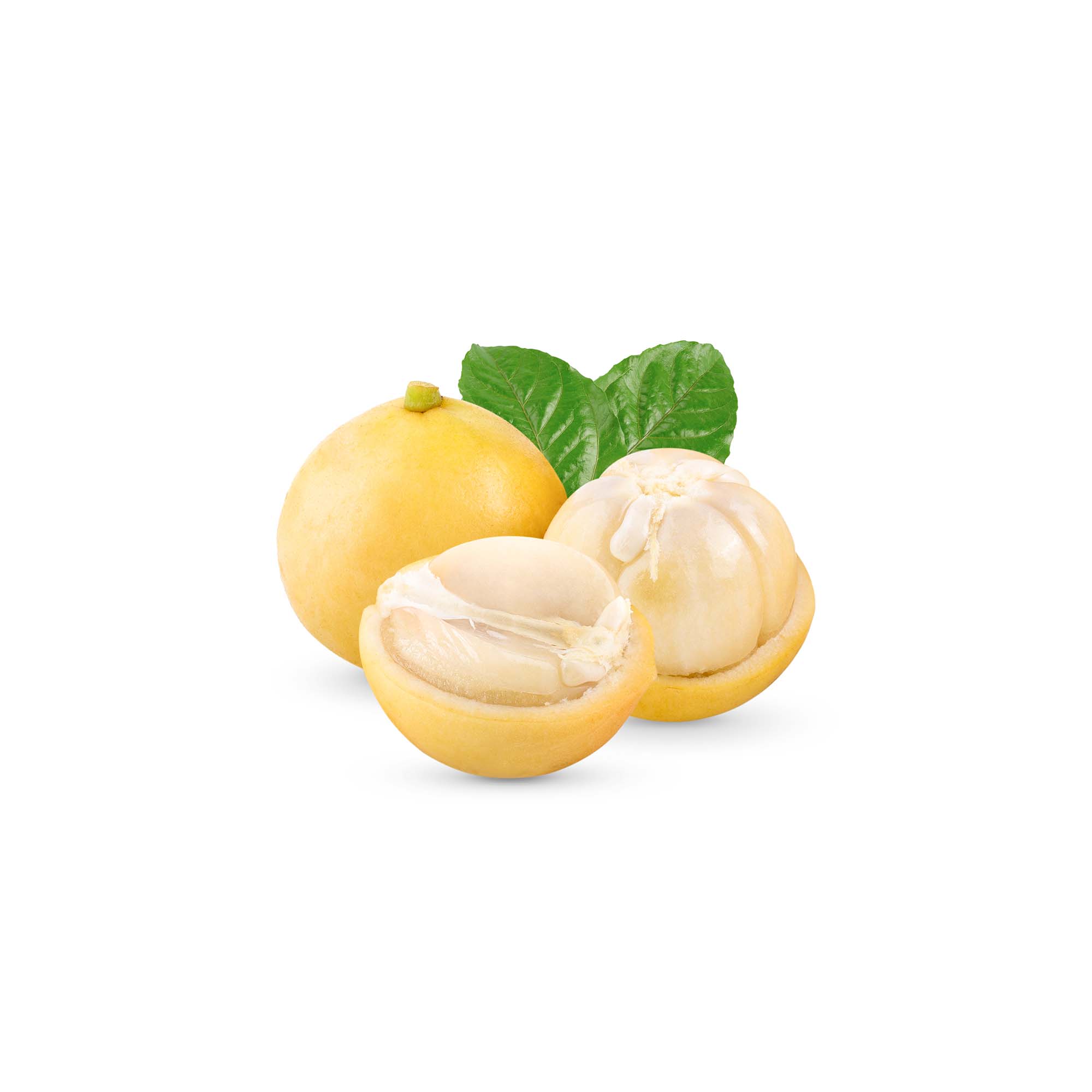
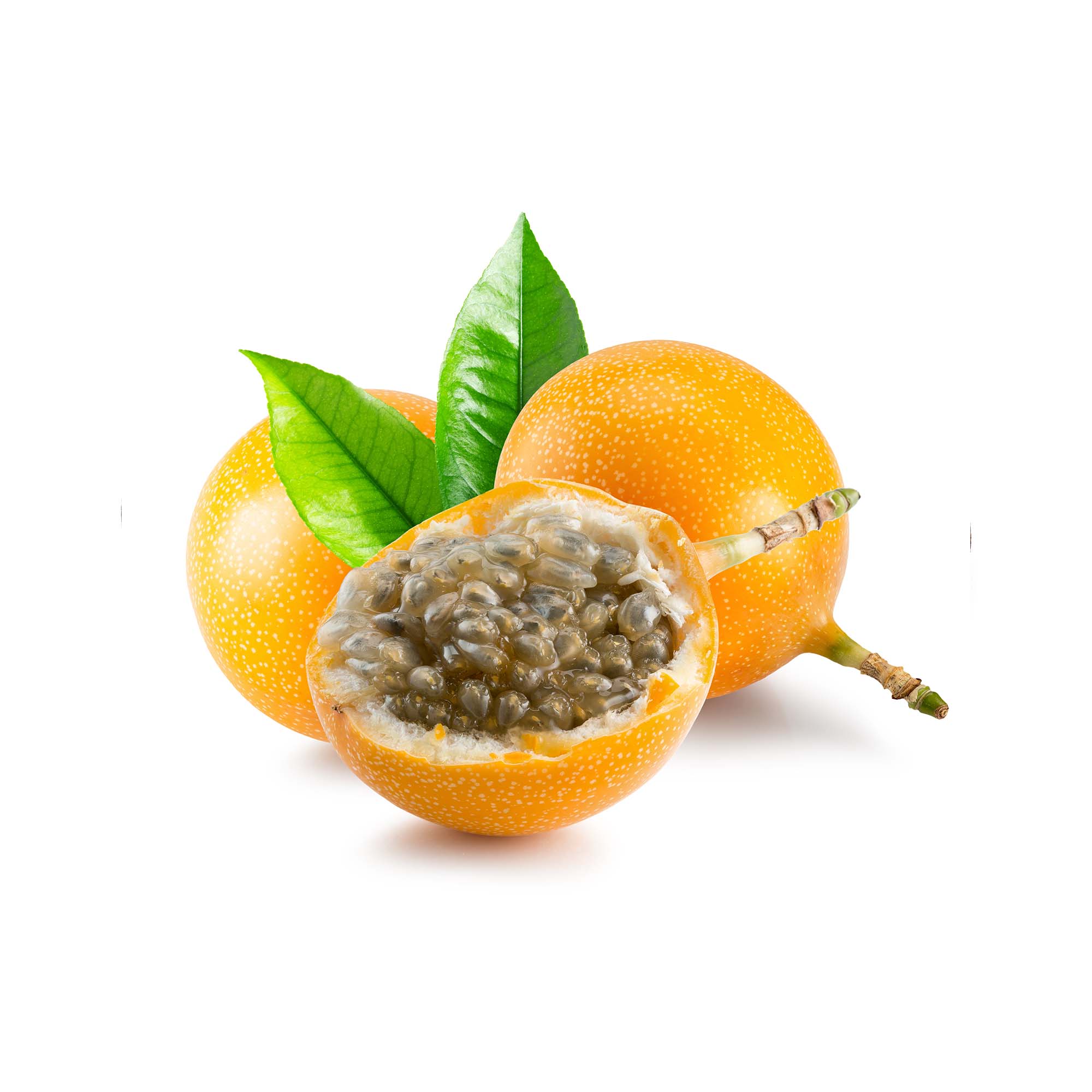
Granadilla (Passiflora ligularis) is a plant species in the genus Passiflora which is native to the Andes Mountains. It is an evergreen climbing shrub and the fruit is orange to yellow coloured with small light markings. In general, the fruits are small in terms of size and their shape is round with a tip ending in the stem. The fruits nowadays can be found in both tropical and subtropical regions.
History
Granadilla is native to Andes Mountains and in many regions of South and Central America where it has been growing since ancient times. There were later introduced in the USA, in the Caribbean, and in Asia.
Regions
The fruit is produced in many different countries around the globe. Large quantities are produced in Australia, New Zealand, Hawaii, Colombia, Argentina, Venezuela, Paraguay, Ecuador, and Peru.
Flavours & Texture
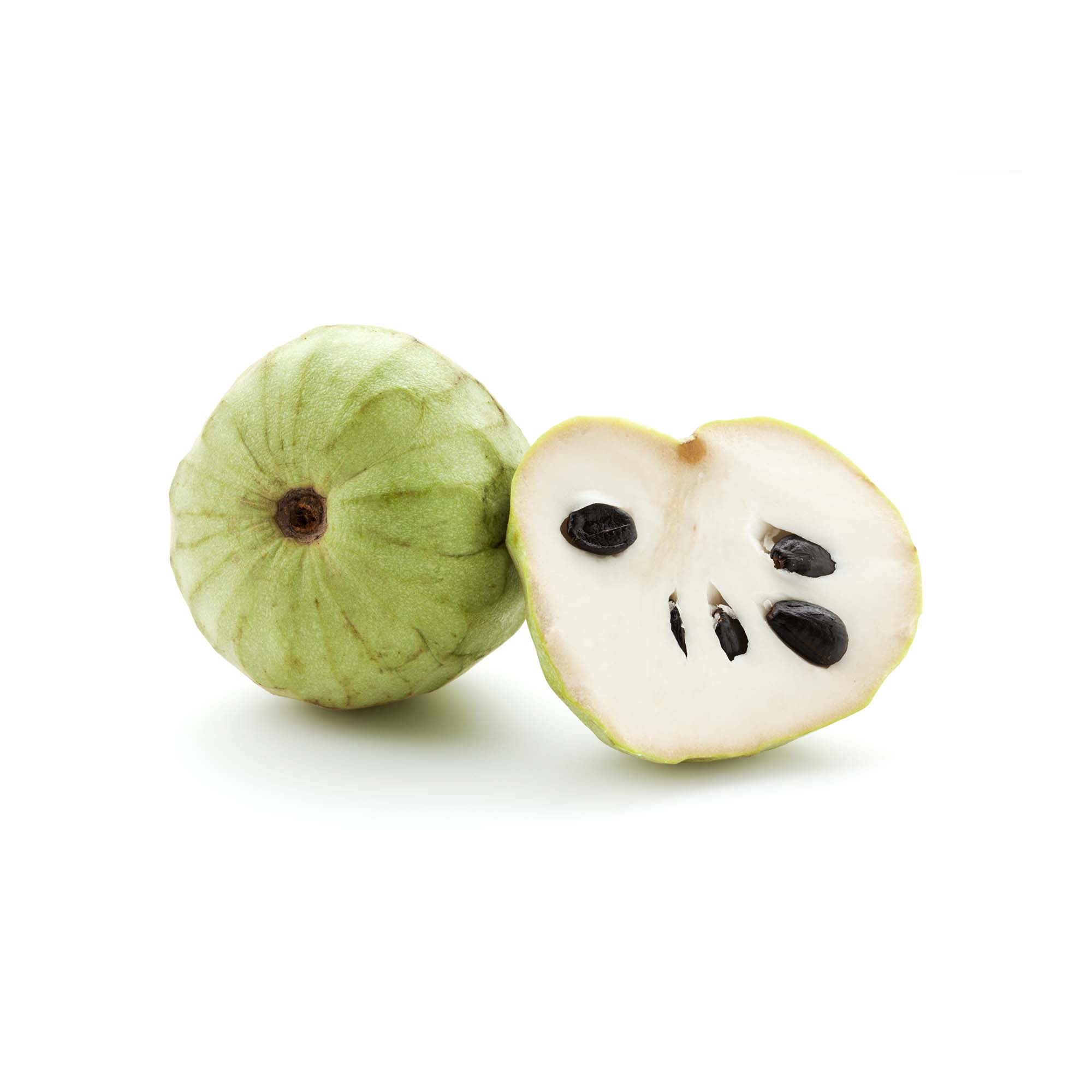
Their taste has been described as sweet and sour but they are in general sweeter than passion fruit. Their flesh is gelatinous and watery with black edible seeds.
Preparation
Granadilla can be consumed fresh out of hand. The brittle rind can be sliced or broken in half by hand, and the pulp can be scooped with a spoon and eaten raw. In addition, you can add it in your fruit salad, make juice or smoothies.
Nutritional Value
Granadilla is low in calories, fat free, high in fiber and excellent source of vitamins and iron.
|
Calories per 100 g |
97 kcal |
|
Fat |
0 g |
|
Carbohydrates |
23 g |
|
Fiber |
10 g |
|
Protein |
2 g |
|
Vitamin A |
43 % of the RDI |
|
Vitamin C |
50 % of the RDI |
|
Iron |
20 % of the RDI |
Introduction
Granadilla (Passiflora ligularis) is a plant species in the genus Passiflora which is native to the Andes Mountains. It is an evergreen climbing shrub and the fruit is orange to yellow coloured with small light markings. In general, the fruits are small in terms of size and their shape is round with a tip ending in the stem. The fruits nowadays can be found in both tropical and subtropical regions.
History
Granadilla is native to Andes Mountains and in many regions of South and Central America where it has been growing since ancient times. There were later introduced in the USA, in the Caribbean, and in Asia.
Regions
The fruit is produced in many different countries around the globe. Large quantities are produced in Australia, New Zealand, Hawaii, Colombia, Argentina, Venezuela, Paraguay, Ecuador, and Peru.
Flavours & Texture
Their taste has been described as sweet and sour but they are in general sweeter than passion fruit. Their flesh is gelatinous and watery with black edible seeds.
Preparation
Granadilla can be consumed fresh out of hand. The brittle rind can be sliced or broken in half by hand, and the pulp can be scooped with a spoon and eaten raw. In addition, you can add it in your fruit salad, make juice or smoothies.
Nutritional Value
Granadilla is low in calories, fat free, high in fiber and excellent source of vitamins and iron.
|
Calories per 100 g |
97 kcal |
|
Fat |
0 g |
|
Carbohydrates |
23 g |
|
Fiber |
10 g |
|
Protein |
2 g |
|
Vitamin A |
43 % of the RDI |
|
Vitamin C |
50 % of the RDI |
|
Iron |
20 % of the RDI |
Original: $3.34
-65%$3.34
$1.17Description
Introduction
Granadilla (Passiflora ligularis) is a plant species in the genus Passiflora which is native to the Andes Mountains. It is an evergreen climbing shrub and the fruit is orange to yellow coloured with small light markings. In general, the fruits are small in terms of size and their shape is round with a tip ending in the stem. The fruits nowadays can be found in both tropical and subtropical regions.
History
Granadilla is native to Andes Mountains and in many regions of South and Central America where it has been growing since ancient times. There were later introduced in the USA, in the Caribbean, and in Asia.
Regions
The fruit is produced in many different countries around the globe. Large quantities are produced in Australia, New Zealand, Hawaii, Colombia, Argentina, Venezuela, Paraguay, Ecuador, and Peru.
Flavours & Texture
Their taste has been described as sweet and sour but they are in general sweeter than passion fruit. Their flesh is gelatinous and watery with black edible seeds.
Preparation
Granadilla can be consumed fresh out of hand. The brittle rind can be sliced or broken in half by hand, and the pulp can be scooped with a spoon and eaten raw. In addition, you can add it in your fruit salad, make juice or smoothies.
Nutritional Value
Granadilla is low in calories, fat free, high in fiber and excellent source of vitamins and iron.
|
Calories per 100 g |
97 kcal |
|
Fat |
0 g |
|
Carbohydrates |
23 g |
|
Fiber |
10 g |
|
Protein |
2 g |
|
Vitamin A |
43 % of the RDI |
|
Vitamin C |
50 % of the RDI |
|
Iron |
20 % of the RDI |